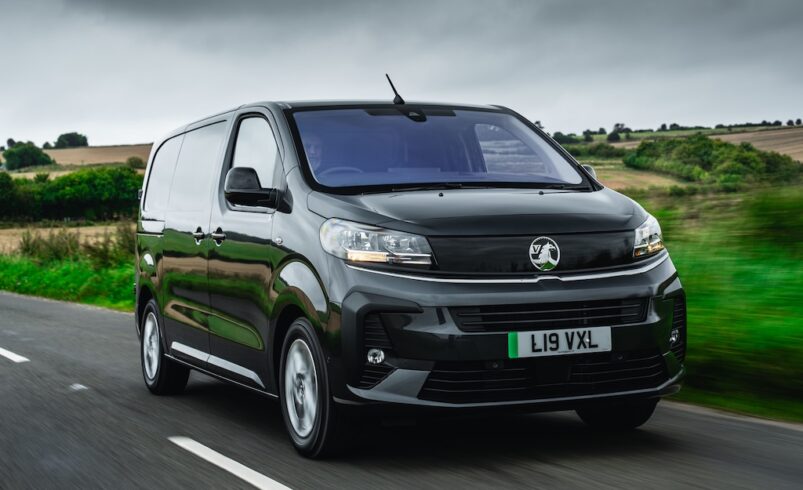
The August new van market rose 0.6% as EV share peaked and pickup sales continued to plunge, new figures from the Society of Motor Manufacturers and Traders (SMMT) reveal.
 Although August is typically a lower-volume month ahead of the crucial September plate change, the market grew for a fifth consecutive month with 14,445 units registered.
As a result, year-to-date registrations reached 201,671 units, up 4.0% on the first eight months of 2025.
Large vans continued to drive overall growth, rising 5.2% to 10,943 units to mark their ninth consecutive month of growth. Demand in the small volume 4×4 sector also grew, by 165.6%, with 510 registrations.
In contrast, the medium- and small-sized van segments fell by 3.9% and 15.1% to 2,289 and 299 units respectively.
Pickups recorded the steepest decline with a fall of 61.2% to 404 units, down to just 2.8% of the market as last year’s tax changes continue to stall demand. The SMMT has reiterated its calls for policy revision as it highlights the sector’s importance to essential industries and fleet renewal.
An even more notable development was the surge in electric van uptake, with registrations rising 25.9% to 2,395 units and a record 16.3% market share.
However, the SMMT noted that August’s typically low overall volumes can exaggerate percentage shifts.
Mike Hawes, SMMT chief executive, said: “August’s traditionally low volumes often lead to market volatility – and while a record market share for electric vans should rightly be celebrated, September will show the reality of the transition as the new numberplate drives greater volume.
The industry body also warned the year-to-date market share for eLCVs is still just 11.0% – less than half of the 24% ZEV mandate target for 2026.
The Government is currently consulting on possible changes to the ZEV mandate. On the van side, the Department for Transport has asked for input on four alternatives to the current 70% ZEV van sales target for 2030, aimed at easing compliance for manufacturers.
The SMMT said that higher upfront purchase costs, insufficient charging provisions and wider operating pressures continue to hold back electric van take-up. It wants “meaningful” reform of the sales quotas to strengthen the UK’s investment appeal while preserving consumer choice and sustaining fleet renewal
Mike Hawes continued: “With EV demand remaining drastically adrift of mandate targets, the Government’s decision to bring forward its review is essential, and meaningful change will be required to sustain a market that keeps the economy moving. Reforming the regulation to align with market conditions will drive investment, protect the UK’s competitiveness and deliver a transition that benefits everyone.”
According to August’s top 10 van registration rankings, the Ford Transit Custom remained the UK best-seller, followed by the Mercedes Sprinter, Volkswagen Transporter, Ford Transit and Vauxhall Combo.
Calum James, general manager for Farizon Auto UK at Jameel Motors, said: “It’s encouraging to see record numbers of van drivers switching to electric. At Farizon we’re 100% electric, and we’ve seen great levels of interest not just from fleets, but tradespeople too.
“While 17% is a way off the mandated target of 24%, electric vans such as the Farizon SV and V7E are showing operators that eLCVs can do the job instead of a diesel, often at a more compelling total cost of ownership.”
Sue Robinson, chief executive of the National Franchised Dealers Association (NFDA), said: “Five consecutive months of growth is encouraging and the increase in electric van registrations is another positive development. However, the continued decline in pickup demand and the gap between electric van uptake and mandated targets show that challenges remain.
“Businesses need confidence and the right conditions to invest, and regulation must reflect market realities while supporting a sustainable transition to zero-emission vehicles.”