The second life problem: What happens to specialist vans when the job is over?
30 September 2026
0
Matthew MacConnell
For many van operators, the standard panel van is only the starting point. Matt MacConnell investigates what happens beyond the original job. A plumber might need racking, shelving
For many van operators, the standard panel van is only the starting point. Matt MacConnell investigates what happens beyond the original job.
Does a conversion add value, or does it actually make the vehicle harder to sell?
A plumber might need racking, shelving and secure storage. A mobile workshop could require a generator, workbench and specialist tools, while a refrigerated delivery fleet may need an insulated load space and temperature-control equipment. Ambulances, welfare vehicles, cherry pickers and utility vans can all be transformed almost beyond recognition from the vehicle that originally left the factory.
For the business running it, the conversion is essential. But what happens when the lease ends, the vehicle is replaced, or the original job disappears?
This is where the economics of specialist van conversions become complicated — and where the industry is beginning to confront the second-life problem.
A conventional used van has a relatively predictable future. Once it leaves one fleet, it can be sold to another operator, a small business or a private buyer. Age, mileage, condition, payload and specification all help determine its value.
A van fitted out for one particular purpose is a different proposition. Does the conversion add value, or does it actually make the vehicle harder to sell?
Residual values become harder to predict. A £30,000 panel van might have a straightforward second life. However, a £50,000 van with £20,000 worth of bespoke equipment is much harder to value — and potentially harder to remarket. On the other hand, removing that equipment isn’t always straightforward, either.
Built for the job, not necessarily for the next job
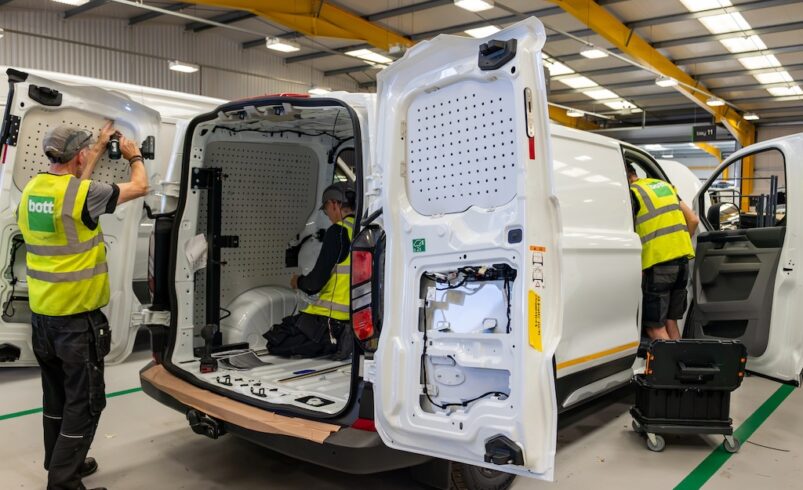
Traditional conversions have often been permanent. Shelving is bolted in, floors are replaced, electrical systems are added and equipment is mounted wherever it needs to go.
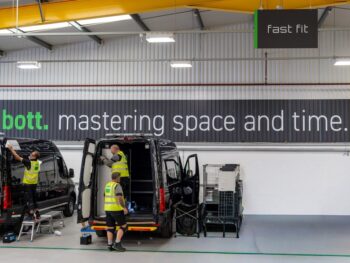
Bott recommends early collaboration with the converter, ideally before a base vehicle is selected
None of this is a problem when the vehicle is intended to remain with the same operator for years. But if the objective is to maximise its usefulness beyond its first life, things look different.
A conversion that can be removed without damaging the underlying vehicle potentially gives the van a much broader future. Specialist equipment can be transferred to a replacement vehicle, while the original van can be returned closer to standard specification.
In theory, it sounds simple. In practice, it depends on how the conversion was designed.
This is where companies such as Bott have been pushing the industry forward. Its guidance for fleet operators emphasises early collaboration with the converter, ideally before a base vehicle is selected. Seemingly minor factory options can have major implications for payload, compliance and long-term flexibility.
Bott also stresses the value of involving end users early. The people who operate the vehicle day to day often highlight problems that fleet managers or procurement teams miss, helping to create a conversion that works better in its first life and is easier to adapt in its second.
Modularity matters — but it isn’t the whole story
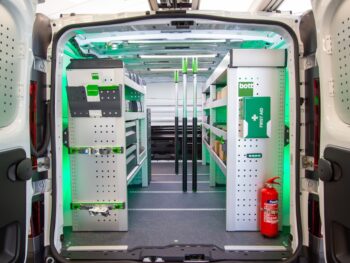
Bott says its Vario3 racking system is designed for durability and, when properly maintained, can outlast the lifecycle of a single vehicle — sometimes two.
When properly maintained, the Vario3 racking system can outlast the lifecycle of a single vehicle, or even two
Crucially, Bott uses existing vehicle fixing points rather than drilling into the structure, making it easier to transfer equipment into a replacement van. Its modularity means racking can be refurbished, reconfigured and reused, and in many cases only the mounting brackets need to change.
However, even with a modular system, vehicle suitability isn’t guaranteed.
Replacing a van with the same make and model does not always mean the internal dimensions will be identical. Wheel-arch positions, door apertures, fixing-point locations and load-space measurements can vary between model years or trim levels. Racking may therefore need modification before it can be installed in a replacement vehicle, increasing labour and material costs.
Safety and certification are also essential. Any second-life installation requires inspection to confirm that refurbished components are safe for continued use.
A vehicle may have been involved in an accident without obvious damage to the racking. Although Vario3 is crash-tested, a significant impact could compromise its structural integrity. There may also be limited visibility regarding how equipment has been used — whether it has been overloaded, subjected to excessive wear or modified during its life.
These unknowns can affect warranty provision, product liability, health and safety compliance and certification.
Reuse makes the strongest financial sense when removal and reinstallation are efficient
Cost is another factor that is often misunderstood. Reusing equipment isn’t always cheaper than buying new. Removing racking, transporting it, cleaning and refurbishing components, inspecting them, replacing worn parts, manufacturing new brackets and reinstalling the system can add up quickly.
In some cases, the total cost can exceed that of a new system. Reuse makes the strongest financial sense when removal and reinstallation are efficient, components are highly modular, vehicle layouts are broadly similar and little reconfiguration is required.
Product evolution adds another complication. Vario3 continues to develop, bringing improved functionality but potentially making refurbishment harder as older components become obsolete or superseded. Sourcing replacement parts or integrating older equipment with newer vehicle platforms can become increasingly difficult.
Bott also warns operators against letting cost-cutting drive poor specification decisions. A cheaper conversion may save money upfront but create hidden costs through downtime, reduced productivity or shorter component life — all of which can affect the vehicle’s second life.
Specialist sectors face even greater challenges
The problem becomes more pronounced where vehicles are heavily customised.
Victory Conversions — now led by newly appointed managing director Mark Brickhill — specialises in protected carrier vehicles, ambulances, incident command units and dog cars for police, fire and ambulance services.
These vehicles are built for highly specific operational roles, often with bespoke electrical systems, reinforced structures, specialist storage and mission-critical equipment.
Brickhill inherits a business that has grown rapidly under founding MD Steve Shaw, and Victory’s work highlights a key truth: the more specialised the vehicle, the harder it can be to repurpose for a second owner.
Emergency service conversions are often engineered around unique requirements. The equipment may have value, but the underlying van can have a much narrower market. In these cases, the second-life challenge isn’t just technical — it’s commercial.
The market for used conversions
A leasing company selling a fleet of identical panel vans can usually remarket them through a broad network of dealers and auctions. Highly converted vehicles require a much more targeted approach.
The audience becomes narrower, and the vehicle needs to be placed in front of operators who understand and value the equipment fitted to it. That might mean approaching businesses in the same sector, specialist commercial-vehicle dealers or companies that trade in niche used vans.
Condition becomes particularly important.
A standard van with a few cosmetic marks may still be perfectly acceptable to a second owner, but a specialist conversion that has worked hard for five years can be a different proposition. Damage to racking, refrigeration systems, electrical equipment or bespoke bodywork can quickly erode its value.
Mileage matters, but it isn’t the only factor. For many buyers, a well-maintained specialist vehicle with a complete service history and a conversion from a recognised manufacturer can be more attractive than a lower-mileage example with an uncertain past.
That gives fleets an opportunity to think about remarketing from the moment a vehicle enters service.
Keeping detailed records of the conversion, maintaining specialist equipment properly and retaining documentation about what has been fitted or modified can all make the eventual sale easier. A van with clear traceability and evidence of professional upkeep is more likely to find a second owner who appreciates its capabilities rather than seeing it as a disposal problem.
A specialist van doesn’t have to become a specialist used van
If the conversion can be separated from the vehicle, the equipment can find another home while the underlying van returns to the wider market. One vehicle can effectively have several lives.
That doesn’t mean every conversion should be designed to be stripped out. Sometimes the equipment is the most valuable part of the vehicle and removing it would destroy rather than create value.
The important thing is understanding that distinction before the conversion is commissioned.
As businesses look more closely at total cost of ownership — not just what a van costs when new, but what it is worth when the job is over — the second-life problem is becoming impossible to ignore.
The industry is getting smarter about how vans are specified, converted and operated. The next step is getting smarter about what happens next.