Bridge strikes rise for second year, prompting fresh operator compliance warning
26 November 2026
0
Natalie Middleton
The number of bridge strikes across Britain’s railway network has increased for a second consecutive year, triggering fresh warnings to commercial vehicle operators to tighten their preventative procedures.
The number of bridge strikes across Britain’s railway network has increased for a second consecutive year, triggering fresh warnings to commercial vehicle operators to tighten their preventative procedures.
1,706 bridge strikes were recorded in 2025/26, up 2.4% on the previous year
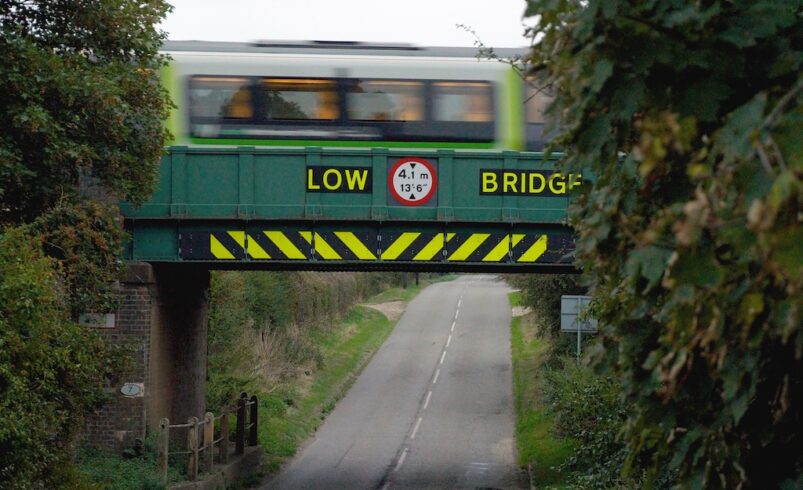
New figures from Network Rail show 1,706 incidents were recorded during 2025/26, up 2.4% on the 1,666 in the previous year. The strikes caused more than 185,000 minutes of passenger delays and cost around £13.25m in delays, cancellations and repairs. Watling Street railway bridge on the A5 in Hinckley, Leicestershire, topped the list of Britain’s 10 most-bashed railway bridges in 2025/26.
The figures come after Network Rail launched a three-month trial in December 2025 to test new technology designed to speed up bridge strike assessments. Working in partnership with BES Group, cameras and impact sensors were installed at Harlaxton Road bridge in Grantham – one of Britain’s most frequently struck railway bridges – to provide real-time alerts and capture data and video footage following a collision. During the trial, the system successfully detected strikes and gave engineers data to support quicker damage assessments on most, though not all, occasions.
Network Rail is now using the findings to refine the technology and evaluate its wider rollout.
The rail infrastructure manager has also urged drivers and transport operators to ‘Wise Up, Size Up’ by checking vehicle heights and planning suitable routes before every journey.
Following publication of the figures, Phil Breen, head of commercial at specialist transport law firm LMP Legal, has called for greater vigilance among commercial vehicle operators.
Breen – who spent more than two decades with the DVSA and several years as a member of Network Rail’s Bridge Strike Prevention Group – said the latest data highlights the need for operators to take a closer look at the preventative measures they have in place.
“It’s easy to look at a bridge strike and immediately attribute it to driver error, but there’s often a much wider set of circumstances that need to be considered. Was the vehicle’s height known? Was the route properly planned? Had the driver received the appropriate training? Were the right procedures in place?
“Operators need to be asking themselves these questions before something happens, rather than waiting until an incident occurs and finding out where the shortcomings were.”
Phil Breen, head of commercial at LMP Legal
Emphasising that bridge strike prevention must start with the operator, Breen suggested that one of the biggest challenges is ensuring it’s treated as an operational responsibility rather than something left almost entirely to individual drivers.
While drivers clearly have a responsibility to know the height of their vehicle and follow suitable routes, operators also need to demonstrate that they have the right systems in place to support them.
This includes maintaining accurate vehicle and trailer height records, ensuring drivers understand how to measure their vehicles correctly and making sure anyone involved in route planning has access to the relevant information. The same procedures should apply when using hired vehicles, unfamiliar trailers or temporary drivers.
Network Rail research has previously found that 43% of lorry drivers admitted to not measuring their vehicle before setting off, while 52% said they did not take low bridges into account when planning their journeys.
Breen added: “It’s also important that the people planning journeys have access to the same information. Otherwise, you can have a situation where a driver is given a route without the planning team fully understanding the dimensions of the vehicle they’re operating. Ultimately, bridge strike prevention needs to be built into the way a transport operation runs, rather than relying on drivers to get everything right themselves.”
Operators could face wider legal and regulatory scrutiny
The consequences of a bridge strike can extend well beyond immediate vehicle or infrastructure damage, potentially triggering police investigations and scrutiny from the Traffic Commissioner into vehicle maintenance, driver training, route planning and transport manager oversight.
Breen warned: “It’s not simply a case of pointing the finger at the driver. Depending on the circumstances, the operator and transport manager could also come under scrutiny, particularly if there are questions about whether reasonable preventative measures were taken.
“Operators need to understand that the implications of these incidents can extend well beyond the immediate cost of damage and disruption. Being able to demonstrate that they have taken reasonable steps to prevent an incident is therefore vital.”
Winter pressures shouldn’t compromise prevention
With the industry moving through the winter peak, Breen also urged operators not to let adverse weather, road closures, agency drivers or hired vehicles compromise basic safety checks.
“If a driver encounters an unexpected road closure or diversion, for example, they need to know who to contact and where to get advice. They shouldn’t be left to make decisions about unfamiliar routes without the appropriate support,” he said.
Greater vigilance needed across the industry
Breen also said the latest figures should serve as a wake-up call for the industry as a whole.
“We’ve now seen two consecutive annual increases, and while there will always be incidents that are difficult to anticipate, there are many that could be easily avoided simply through better preparation.
“Operators need to look inward at their own businesses, identify where the risks are and make sure the right procedures are being followed. Bridge strike prevention shouldn’t be something that only comes under scrutiny after an incident. It needs to be part of the day-to-day running of every transport operation.”