The next funding window for the Government’s Depot Charging Scheme opens on 28 October 2026, offering commercial fleets a fresh opportunity to secure infrastructure grants.
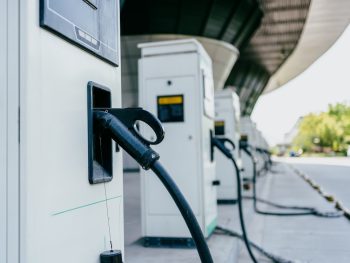
The multi-year scheme, which part-funds the installation of charging infrastructure at fleet depots to support the uptake of zero-emission HGVs, vans and coaches, will see its next application window run from 28 October 2026 to 29 January 2027. Funded projects are expected to begin from April 2027 and must be delivered by 31 March 2028, although exact terms and grant rates for this specific phase are still to be confirmed.
The scheme, which follows a successful 2025/2026 pilot, is backed by a £170m multi-year funding commitment running up to 2030. For the upcoming funding cycle, the Government has earmarked £38m (Window 2) to be allocated and spent across the 2027/28 financial period. This follows an initial £28m funding window that ran from 25 March 2026 to 30 June 2026, covering 70% of charge point and civil costs, up to £1m across all sites. For those projects, applicants have until 31 March 2027 to complete works. The scheme did not limit the number of sites that could be applied for, but was limited to one application per organisation.
Tom Rowlands, managing director, global EV solutions at Corpay, said the Depot Charging Scheme provides welcome help with upfront costs, but warned that grants are only part of the answer.
Rowlands outlined that installing chargers is only the start of making fleet electrification work and that operators also need visibility over ongoing energy costs, how charging is paid for and reconciled across locations and whether the economics hold over the life of the vehicles and infrastructure.
He elaborated: “A charger in the ground is not the same thing as a viable charging operation. For fleets, infrastructure only works if the commercial model around it works too.
“The Depot Charging Scheme support can help businesses with the upfront cost of infrastructure, but deployment is only one part of the equation. Fleets also need visibility over the ongoing cost of energy, how charging is paid for and reconciled across different locations and whether the economics remain workable over the lifetime of the vehicles and infrastructure.”
Rowlands said that as more businesses electrify, the focus has to move beyond simply increasing the number of chargers installed.
“Fleets need charging that is reliable, commercially sustainable and straightforward to manage as part of everyday operations.
“For electrification to scale successfully, infrastructure policy needs to support how fleets actually use and pay for charging and not just how quickly that infrastructure can be deployed.”
Full details of the Depot Charging Scheme are online here.