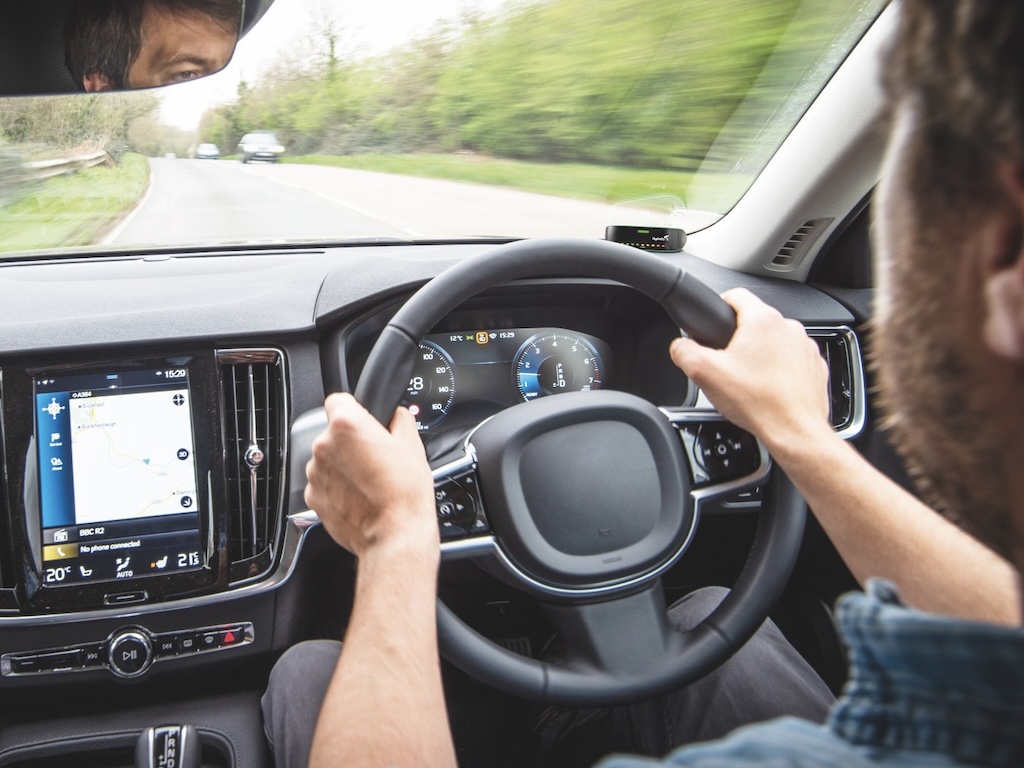
Do the benefits of installing dashcams outweigh the cost? Matt MacConnell investigates.
 Advanced systems using clever sensors and artificial intelligence to feed accurate information to back-office staff can save time, something that’s valuable when managing a fleet. However, with advanced technology comes higher costs – and although many dashcam companies claim that their products are game-changing, we spoke with fleets to see whether spending big cash on cutting-edge cameras and software is worth it.
A quick Google search will show there are hundreds of dashcam companies and fleet managers can quickly find themselves in a minefield. But it’s important to pick a product that suits your needs.
Many dashcam providers will offer packages which usually contain one forward- and two side-facing cameras. These units are, roughly, priced between £845 and upwards of £1,300 a package, including installation and depending on the product model and provider. According to a recent government consensus, most small companies have 10 vans or fewer. That means it would cost £8,450 for a 10-van fleet at the lowest price.
AI cameras often communicate with software, something that’s usually provided by the dashcam provider. This software is then used to analyse events such as accidents, speeding or harsh acceleration in the vehicle the camera is installed in. This not only helps protect the fleet operator, but can also provide insight on where operators require more training. However, SD card-based cameras are still popular amongst fleets that don’t require what can be a complicated AI system.
A shore fit
Kealshore Ltd, an aggregate specialist, has used Durite camera systems for around 10 years in its trucks. The company has since installed Durite’s SD card four-channel digital video recording kits across its 20-strong truck fleet. “Working in the aggregates business, our wagons spend a lot of time on construction sites,” says Kealshore garage foreman, Darren McClymont. “Undoubtedly, the cameras are a great visual aid for our drivers when they are reversing or performing other manoeuvres. However, the primary benefit to our business has been having a clear and accurate record of events during an accident.”
The Durite kits are compatible with 12 and 24V vehicles and include a 7-inch LCD monitor, four infrared cameras and a 32GB SD card. “There are collisions where they have tried to blame our driver when the footage obviously shows we were not at fault,” reveals McClymont. “It is fair to say that Durite cameras have successfully saved us a good amount of money and time over the years.”
Some believe that having a dashcam fitted reduces insurance premiums. This isn’t necessarily true, but evidence, tied with vehicle data, can help prove fault during insurance claims. Colin Woolmer, technical solutions manager at Fraikin, says: “We have seen examples recently of customers who have been told that, without installing cameras, they would not be able to renew their insurance. This is a key change in the approach of commercial insurers who have struggled to make a profit in this space for many years.”
Manual or auto?
UK-based Advanced Proteins previously used a manual video request system, which took two to three days to retrieve footage. This meant large delays in compliance, incident investigations and insurance claim processing. Likewise, the system didn’t feature driving behaviour insights such as mobile use or fatigue, meaning intervention before accidents proved difficult. The fleet installed Fleet Focus AI cameras, allowing for quick video access and 90-day footage storage. Similarly, it allowed back-office staff to track driver activity, vehicle status and location so routes could be monitored and adapted to reduce unnecessary mileage.
“Within the first day of installation, we had an incident where video evidence from Fleet Focus’s system protected us from a costly claim. The system effectively paid for itself immediately,” says Adrian Spencer-Hicks, Advanced Proteins’ transport manager. One of the company’s drivers was falsely accused of speeding, but the footage proved otherwise.
In-cab devices provide insights into the company’s driving force. They answer pending queries such as “Are my drivers safe?” and “Are they driving safely?”. Before AI times, keeping daily tabs on drivers could be difficult. Fleet telematics company Lightfoot claims 85% of drivers show improved performance within the first few weeks of using a device. This resulted in more consistent and safer driving habits while adhering to company policies.
 “Certainly, in-cab devices such as ours, which monitor driver behaviour, have a tangible impact on accident reduction through coaching (and allied to Lightfoot’s unique gamification system, leading to an 84% reduction in dangerous driving), but it is what they prevent which is where significant savings are made,” reasons Paul Hollick, CEO Lightfoot. “For instance, providing real-time driver feedback helps reduce harsh acceleration, idling and fuel waste, leading to significant cost savings. Lightfoot drivers save up to 15% on fuel by reducing harsh driving behaviours such as sudden acceleration, braking and excessive idling.”
Drilling into vehicle data allows the fleet manager to train operators, which can result in lower vehicle wear. Lightfoot claims that operators who use its products see a 45% reduction in vehicle wear. While that is important to reduce cost and keep drivers safe, other benefits, such as sustainability, can play an important role in maintaining company image while continuing to lower costs.
Keep tabs on your fleet
Telecommunications infrastructure services company Circet has a mixed fleet that includes diesel LCVs and it uses a partnership between Geotab telematics and Lytx Surfsight to connect 3,000 vehicles across the UK and Ireland. Within the first three months of 2025, Circet recorded a 16% improvement in its driver safety score, while fuel efficiency improved to an average of 28.5mpg.
 The fleet also uses electric vehicles that have so far covered more than 263,000 miles and, according to Geotab data, Circet stands to save £385,000 annually by expanding its electric vehicles. “The combined Geotab and Lytx Surfsight solution has transformed how we manage our fleet,” says Ray Verschoyle, head of Circet’s transport compliance. “We now have the data we need to improve safety, cut fuel use, lower maintenance costs and operate more sustainably. Its focus on innovation and ability to integrate with our systems made it the perfect partner for our needs.”
Circet’s systems include Geotab telematics devices and Lytx Surfsight dashcams with road-facing lenses. The hardware communicates with Geotab’s software, which allows the back-office to track vehicles, check safety data and pull footage from one system. The rollout was backed by Geotab’s project team, which trained each operator, so the transition remained smooth.
Although the initial financial and time costs of equipping a fleet with dashcams can be high, it could save fleet managers headaches while retaining the company image. Intelligent AI has benefits and is worth investing in if you wish to track vehicle data, but these come at a cost. SD-based systems could be cheaper but won’t record the same information as more intelligent dashcams. Therefore, fleet managers must decide what best suits their fleet and budget.
Many dashcam and software companies also provide trial periods, which allow a fleet to test a product for several months before committing to a larger order or installation. This also allows back-office staff to adjust to the software, while the fleet operator adjusts to being monitored.