First drive: Mercedes-Benz Vito Sport-X
- 14 October 2026
- 0
John Kendall gets behind the wheel of Mercedes’ crew van revival of the Sport-X badge. What is it? Crew van with five-seat cab How much? From £56,995 (RRP excl.

John Kendall gets behind the wheel of Mercedes’ crew van revival of the Sport-X badge. What is it? Crew van with five-seat cab How much? From £56,995 (RRP excl.
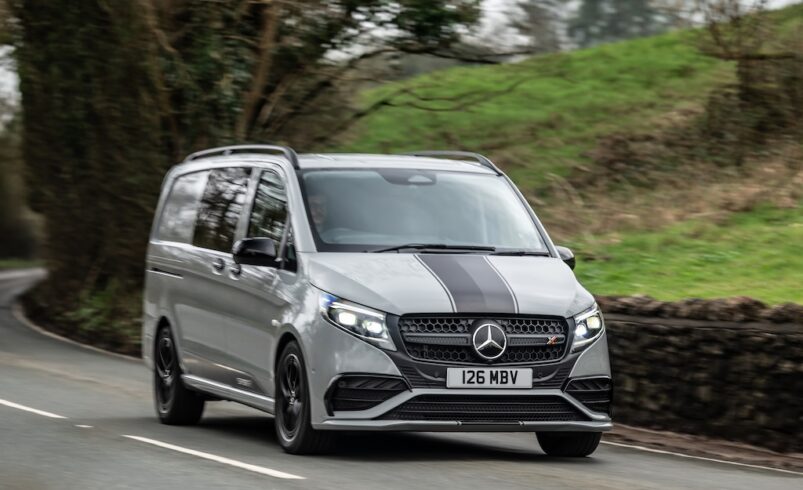
John Kendall gets behind the wheel of Mercedes’ crew van revival of the Sport-X badge.
What is it? Crew van with five-seat cab How much? From £56,995 (RRP excl. VAT) Gross payload? Up to 733kg Economy? Up to 38.7mpg (WLTP) Drive? 2.0-litre turbo diesel with 190hp and 440Nm of torque from 1,350rpm, nine-speed automatic transmission
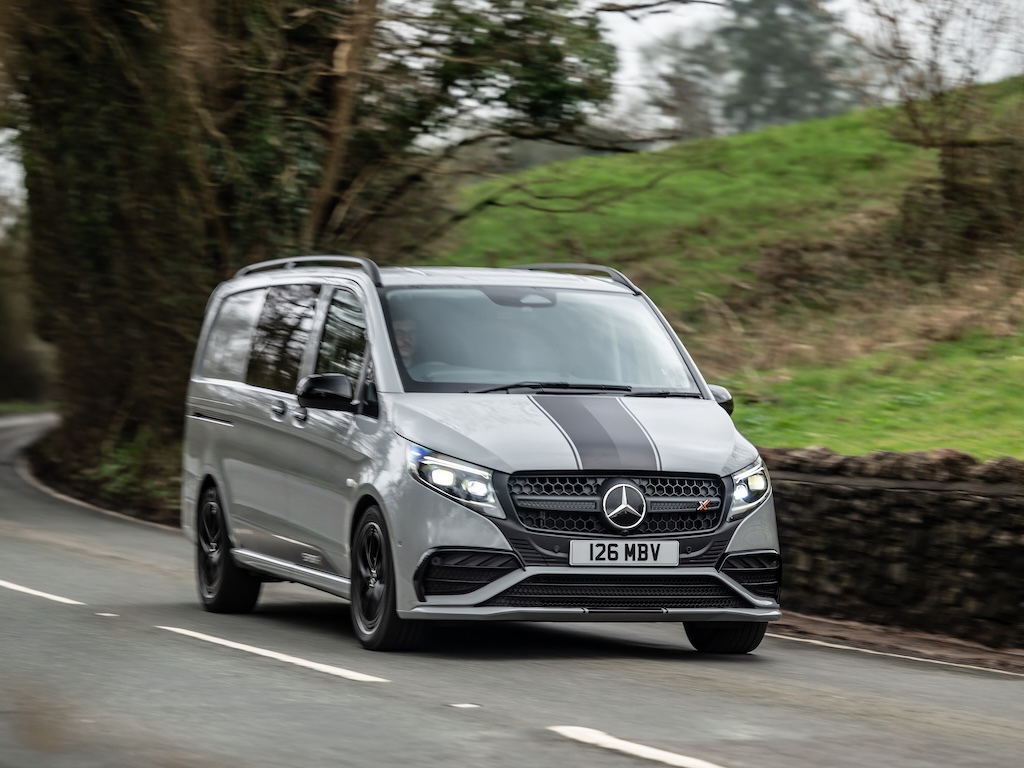
The Vito Sport-X landed in Mercedes showrooms in September, reintroducing a model to the Vito range that had been absent for a few years. It’s a rarity to describe any model as UK-specific these days, but Vito Sport-X has been designed for that sole purpose, while marking 130 years of transport involvement from Mercedes-Benz. Based on the Vito Select trim, it is powered by a 190hp variant of Mercedes’ 2.0-litre diesel, driving the rear wheels through a nine-speed automatic transmission.
On the outside, changes include a redesigned front bumper and grille with integrated splitter, rear spoiler, gloss black detailing, side skirts, roof rails, Sport-X badging, sport stripes on the bonnet and sides and 19-inch diamond-cut black alloy wheels. Standard paint colour is Alpine Grey, with Arctic White or six metallic paints, offered as no cost alternatives.
On the inside, the three-seat front bench has been replaced with two individual sport seats featuring redesigned bolsters and Sport-X branding. Other features include motorsport-inspired black ‘eco-leather’ and dark grey suede upholstery with orange stitching. Heated front seats, a heated steering wheel, wireless phone charging and a centre console unit with storage are all part of the standard package. Since the model is based on Select trim, other standard equipment includes smartphone integration, automatic air conditioning, ambient lighting and a range of advanced driver-assistance systems (ADAS).
It’s an eye-catching design, quite clearly aimed at rivals such as the Ford Transit Custom MS-RT and VW Transporter Sportline.
For now, it does mean that its fleet appeal is a bit limited.
Not surprisingly, the Vito Sport-X feels like a nice place to be. The stripes and body kit ensure that it stands out from the crowd – not a van for the shy and retiring. The 190hp diesel gives plenty of power while the nine-speed automatic transmission makes using that power very easy. Even 10 years ago, automatic transmission was relatively rare in a van, but we are quite rapidly turning into a nation of automatic drivers. The quality of modern automatics, providing smooth gear shifts and the absence of the fuel consumption penalty that used to come with them has made a big difference. Then the transition to electric will consign manual transmission to history for most drivers.
Obviously, even with the L3 body, load space is a bit limited with all seats in place, but the rear three seats can be removed to open the space up, although there is no bulkhead to separate the load from the front seats. That helps to maximise the available space.
On the road, it goes well and handles well. Even without a bulkhead, noise seems to be fairly well suppressed. For those who regularly carry people as well as cargo, or for those who want one vehicle for home and work use, the Vito Sport-X offers a smart compromise.
Key fleet model: Mercedes-Benz Vito
Advantages: High specification; comfort; choice of L2 or L3 models
Disadvantages: High price; restricted payload
Seven-word summary Flagship Vito model has much to offer
Verdict:
While the range-topping Vito Sport-X may not be at the top of fleet managers’ priorities, we suspect that Mercedes will sell every one that appears in a showroom.