UK transport and logistics operators are ramping up investments in sustainability and advanced safety technology, even as mounting administrative friction and workforce pressures threaten to disrupt daily operations, a new industry report reveals.
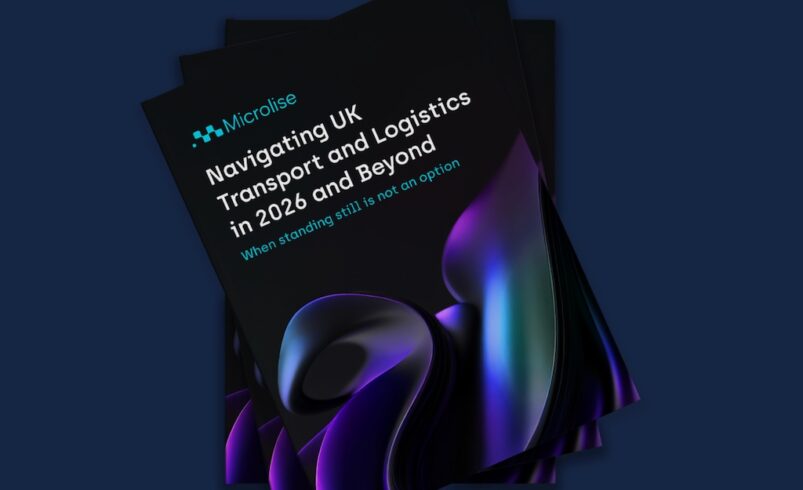
 The findings, published in Microlise’s second annual market study, Navigating UK Transport and Logistics in 2026 and Beyond, paint a picture of a sector balancing rapid technological transformation against stubborn operational bottlenecks.
Based on a survey of 250 UK logistics professionals, the report shows that the industry is undergoing a swift cultural and operational pivot toward greener, safer fleet management.
Sustainability has seen a massive surge on the corporate agenda. Six in 10 transport operators now classify environmental impact as a top organisational priority. That’s a sharp 24% increase from the 36% recorded in Microlise’s 2025 study.
Simultaneously, investments in driver welfare and collision-reduction technologies are yielding significant returns. An overwhelming 90% of transport managers state that drivers feel safer on the road today than they did five years ago, explicitly crediting recent advances in fleet management tools.
Key safety insights from the study include a robust focus on accident Prevention. In total, 83% of managers report that in-cab camera systems have actively prevented a serious road accident involving one of their drivers.
At the same time, more than half of the respondents note that integrated camera technologies have improved overall driver performance by up to 50%.
The study also shows confidence in emerging tech is high, with over 80% of logistics leaders currently using artificial intelligence tools to support fleet and supply chain operations.
Despite high technological confidence on the road, significant operational strains persist in the back office. The report highlights a worrying year-on-year increase in administrative overheads, driven primarily by outdated legacy processes.
Logistics managers now spend an average of 2.3 hours every day manually processing proof of delivery (POD) documentation. That’s a noticeable jump from the 1.7 hours recorded in 2025. This administrative drag comes with a measurable financial penalty, costing businesses an average of £172.40 per day in manual processing inefficiencies alone.
Compounding these day-to-day overheads is a looming talent crisis. While the majority of respondents express a genuine passion for the sector, more than half (over 50%) admit they would consider moving into an entirely different career within the next five years, emphasising a critical need for operators to focus on employee retention and workplace support.
To bridge the gap between ambitious sustainability goals and restrictive daily strains, the industry is shifting away from isolated software applications toward fully integrated ecosystems. Fleet operators are demanding real-time visibility, automated workflows and connected data streams to eliminate manual data entry and protect their bottom lines.
The findings show that transport and logistics operators are working in an increasingly demanding environment, balancing customer expectations, regulatory requirements, sustainability goals and commercial pressure.
Microlise CEO Nadeem Raza said the report demonstrates the positive impact technology is having across safety, sustainability and operational efficiency, while also highlighting areas where challenges remain and further progress can be made.
“As the pace of change continues to accelerate, understanding these trends will be critical in helping operators make informed decisions, improve resilience and build future-ready businesses.”
The full report, Navigating UK Transport and Logistics in 2026 and Beyond, is available to download here.